Nissan
Designed a multi-brand, tokenized Figma design system to resolve cross-market web fragmentation for Nissan, collaborating directly with engineering within an internal content factory.
Global Digital Ecosystem

Role: Product & Design System Designer
Scope: Multi-market Design System Architecture, Product Pages Redesign
Impact: Deployed across key European markets (DE, ES, FR, UK), boosting global conversion to 0.67% (+45%) and reducing overall bounce rate to 35% (-27%).
Product Thinking & Strategic Challenge
Nissan’s global digital presence suffered from cross-market fragmentation. Each regional team adapted components independently, diluting brand coherence and slowing down product launches.
The Strategic Goal: Build a scalable, future-proof Figma design system for global markets while simultaneously validating its flexibility by redesigning core Vehicle Landing Pages (VLPs) for high-impact models: X-Trail, Ariya, and Qashqai.
My Specific Contribution : Component Tokens, System Governance, VLP Layout Architecture, Dev Handoff Specs
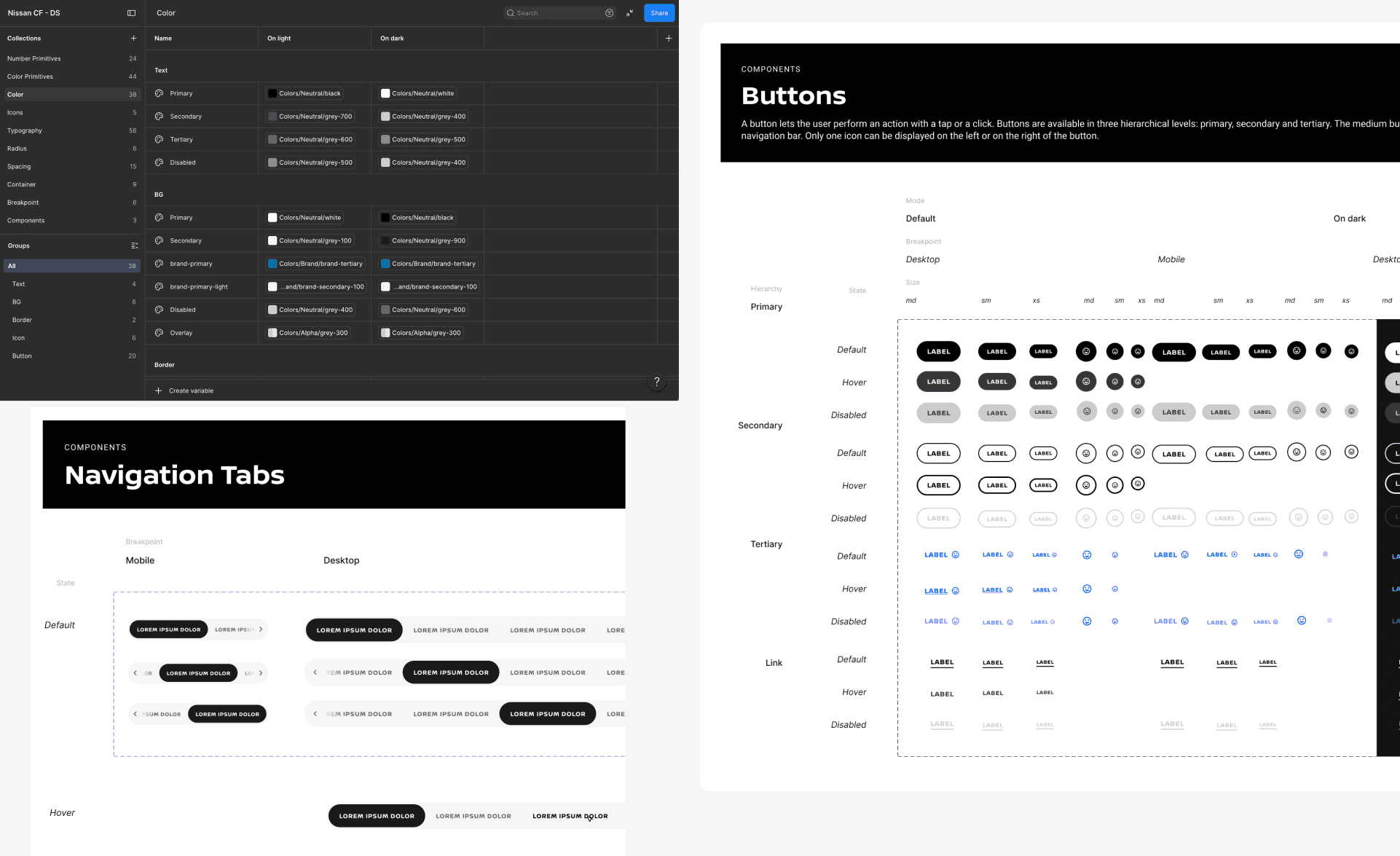
Technical Depth & System Architecture
To ensure long-term adoption, I led the component architecture in Figma, aligning design structures directly with front-end code bases:
Tokenized UI Architecture: Structured multi-brand design tokens (color, typography, spatial grids, and component states) to ensure dynamic responsiveness and dark/light mode adaptability.
Component Governance & Flexibility: Designed modular atomic components with strict structural variants in Figma. This gave regional marketing teams layout freedom without breaking core brand guardrails.
Embedded Dev Workflow: Worked hand-in-hand within an internal Content Factory team, running joint design-to-engineering alignment sessions to ensure 100% token-to-code fidelity.
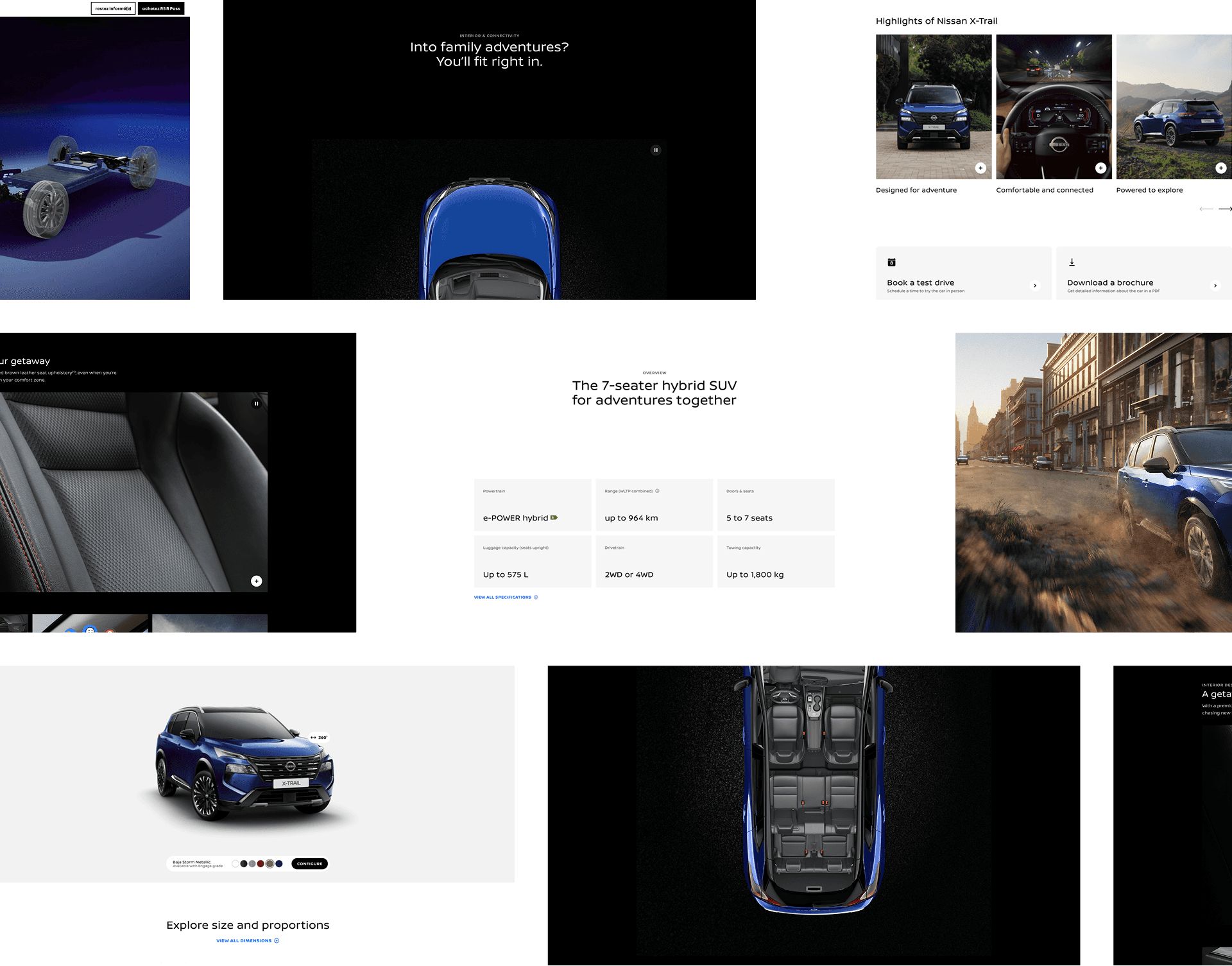
Original Thinking & Experimentation
Behind the process :
Explored 5+ layout variants using AI visual tools and high-fidelity Framer prototypes to stress-test responsive behaviors across localized content.
used figma agent to create my own plugin to export icons
used claude to code animations for quick prototype
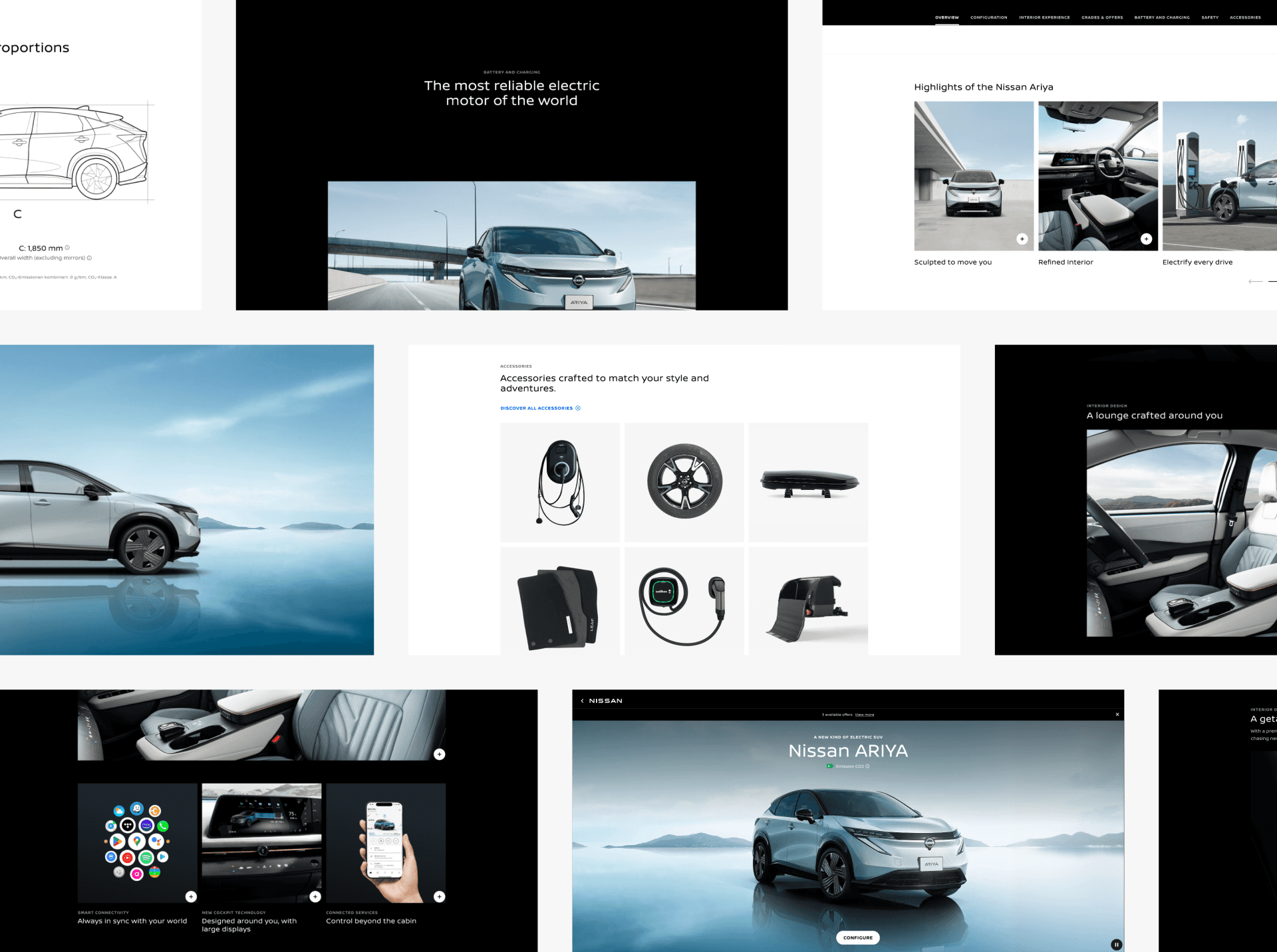
Measurable Business Impact (X-Trail VLP Case Study)
The system was put to the test on the flagship X-Trail Vehicle Landing Page (VLP), driving immediate, quantifiable success across core European markets:
Global Lead Conversion: Reached 0.67% (+45% vs. legacy experience).
User Retention & Engagement: Bounce rate dropped to 35% (-27%), while Key Business Action (KBA) usage reached 35% (+52%), heavily driven by configurator engagement.